

 Global - English
 Brazil - Portuguese
 Thailand - Thai
 Middle East - Arabic
 Vietnam - Vietnamese
 Spain - Spanish
 Colombia - Spanish
 Argentina - Spanish

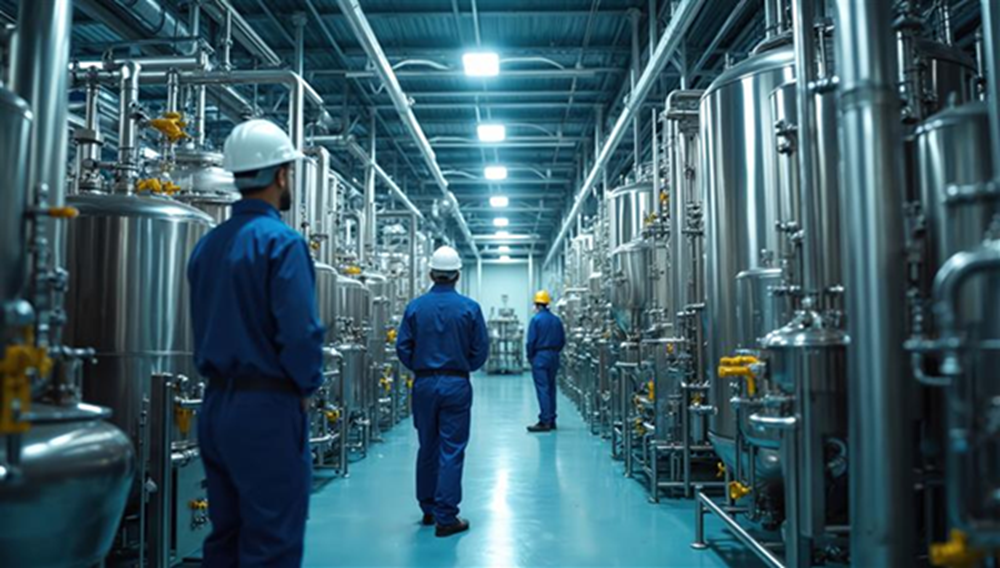
Specialty and pharmaceutical chemicals rarely emerge from a single reaction. In most cases, they are the result of carefully designed multi-step organic synthesis, where each stage modifies the molecule in a controlled and precise way. The success of this process depends on reaction environments, catalysts, reagents, and specialized equipment capable of handling complex transformations. These reactions form the backbone of fine & specialty chemicals development and manufacturing. In this article, we will explain the major reaction types used in the synthesis of specialty chemicals and pharmaceutical chemicals and why companies often rely on experienced distribution and manufacturing partners with strong technical capabilities.
Functionalization Reactions
Functionalization reactions introduce specific chemical groups into a molecule. These groups influence how the molecule behaves, including its stability, solubility, and reactivity. In many cases, functionalization is the step that prepares a molecule for further transformations.
- Chlorination
Chlorination involves introducing chlorine atoms into a molecule. Chlorinated intermediates are widely used in pharmaceutical synthesis, agrochemicals, and specialty materials. This reaction often modifies reactivity, lipophilicity, and metabolic stability in pharmaceutical molecules.
- Bromination
Bromination adds bromine atoms to a molecule and is frequently used to prepare intermediates for further substitution reactions. In pharmaceutical chemistry, brominated compounds are frequently used because they act as a good leaving group in substitution and coupling reactions.
- Nitration
Nitration introduces a nitro group into an aromatic compound. This reaction is particularly important in producing intermediates used in pharmaceuticals, dyes, and specialty chemicals. Nitro compounds can later be converted into amines or other functional groups.
- Sulfonation
Sulfonation adds sulfonic acid groups to organic molecules. This transformation enhances solubility and functionality, making it useful in the synthesis of detergents, dyes, and certain pharmaceutical intermediates.
- Halogen Exchange or Substitution
Halogen exchange reactions replace one halogen atom with another or with a different functional group. This allows chemists to fine-tune molecular reactivity and create intermediates suitable for further synthesis steps.
These functionalization reactions form a foundational part of fine and specialty chemical manufacturing, enabling molecules to evolve through successive stages of chemical development.
Carbon-Carbon Bond Formation
One of the most critical aspects of organic chemistry is the ability to form carbon-carbon bonds. These reactions allow chemists to construct larger and more complex molecular frameworks from smaller building blocks.
- Grignard Reactions
Grignard reactions are among the most widely used methods for carbon-carbon bond formation. They involve highly reactive organomagnesium reagents (RMgX) that nucleophilically attack electrophilic carbon centers, adding new carbon groups to a molecule. These reactions are frequently used in the synthesis of pharmaceutical intermediates, fine chemicals, and complex alcohols. Strict anhydrous (moisture-free) conditions are required for successful Grignard chemistry.
- Friedel-Crafts Acylation and Alkylation
Friedel-Crafts reactions introduce alkyl or acyl groups (R-CO-) into aromatic rings. These reactions are particularly valuable for producing aromatic intermediates that appear in pharmaceuticals, fragrances, and specialty materials.
- Coupling Reactions
Coupling reactions bring two molecular fragments together using catalysts such as palladium. These reactions are widely used in modern pharmaceutical chemistry because they allow chemists to assemble complex structures with high precision.
Carbon-carbon bond formation reactions are essential for building the molecular backbone of many pharmaceutical chemicals and specialty chemicals.
Reduction and Hydrogenation Reactions
Reduction reactions change the oxidation state of molecules, often converting functional groups into more stable or reactive forms. These reactions are a central part of many chemical synthesis pathways.
- High-Pressure Hydrogenation
Hydrogenation involves the addition of molecular hydrogen (H2) to unsaturated bonds in the presence of a metal catalyst. High-pressure hydrogenation systems allow this process to occur efficiently and at speed on an industrial scale, making it valuable for producing pharmaceutical intermediates.
These reactions require specialized high-pressure reactors (often operating at 5–100 bar) and are typically performed with transition metal catalysts such as platinum, palladium, or nickel.
- Reductions Using Pd/C
Palladium on carbon (Pd/C) is a widely used catalyst in hydrogenation reactions. It helps selectively reduce specific functional groups without affecting other parts of the molecule. It is extensively used in the final stages of pharmaceutical synthesis where chemo selectivity is essential.
- Raney Nickel Reductions
Raney nickel is another catalytic system commonly used for hydrogenation. It is particularly useful in industrial applications where large-scale reductions are required.
- Other Catalytic Reduction Systems
Additional reducing systems, such as sodium borohydride, diborane, and related reagents, allow chemists to convert functional groups like aldehydes, ketones, or esters into other forms needed for further synthesis.
Asymmetric reductions create molecules with a specific three-dimensional arrangement. This is especially important in pharmaceutical synthesis because many drugs must exist in a precise stereochemical form to function correctly.
Reduction and hydrogenation processes are therefore critical to the production of specialty and fine chemicals used in research and manufacturing.
Specialized Reaction Conditions
Certain chemical reactions require highly controlled environments. These conditions allow chemists to manage highly reactive intermediates or prevent unwanted side reactions.
- Cryogenic Reactions (−70 °C to −85 °C)
Cryogenic reactions are conditions, rather than a reaction type. It occurs at extremely low temperatures, typically between -70°C and -85°C. These conditions stabilize reactive intermediates and allow precise control over chemical transformations. They are commonly used in the synthesis of complex pharmaceutical intermediates, where precise molecular control is essential.
- Organolithium Chemistry
Organolithium reagents such as N-Butyl Lithium and N-Hexyl Lithium are highly reactive carbanion compounds used to initiate carbon-carbon bond formation. Due to their extreme reactivity with moisture and oxygen, organolithium reactions must be performed under strictly inert conditions, typically under nitrogen or argon atmosphere, in dry solvents, and often at cryogenic temperatures. Applications in fine and specialty chemical synthesis include the preparation of complex pharmaceutical intermediates, lithiated heterocycles, and chiral building blocks for asymmetric synthesis.
- Thermal Rearrangements
Thermal rearrangements occur when heat causes atoms within a molecule to reorganize into a new structure. These reactions help chemists transform simple molecules into more complex configurations needed for specialty applications.
Together, these specialized reaction environments enable chemists to perform transformations that would otherwise be impossible under standard laboratory conditions.
Why These Reactions Matter in Fine & Specialty Chemical Production
Producing fine and specialty chemicals often requires multiple synthesis steps. Each step transforms the molecule in a specific way, gradually building the final chemical structure from simpler starting materials. A single active pharmaceutical ingredient (API) may require 10 or more sequential reaction steps, each with its own conditions, reagents, and purification requirements.
This process depends on access to facilities capable of performing advanced reactions, managing controlled environments, and maintaining strict quality standards. For a specialty or fine chemical manufacturer, the ability to handle diverse reaction technologies determines whether complex molecules can be produced efficiently and at scale.
As chemical structures become more sophisticated, the range of required reactions also increases. This is why many companies rely on specialized infrastructure and technical expertise to support complex synthesis pathways.
What This Means for Companies Sourcing Specialty and Pharmaceutical Chemicals
Companies searching for reliable suppliers of specialty chemicals or pharmaceutical chemicals must consider more than just product availability. Many compounds require complex synthesis pathways that involve multiple reaction technologies, controlled environments, and specialized infrastructure. Contract Development and Manufacturing Organizations (CDMOs) are specialized partners that provide the facilities, technical expertise, and manufacturing capacity required to develop and produce complex chemical intermediates.
Distributors that collaborate with specialized CDMO partners can offer access to advanced manufacturing capabilities in addition to chemical sourcing and distribution.
- Access to Advanced Reaction Technologies: A broad range of reaction technologies to design efficient synthesis routes for complex molecules. Processes such as functionalization reactions, carbon-carbon bond formation, catalytic reductions, and cryogenic reactions are often required when developing advanced fine & specialty chemicals and pharmaceutical intermediates.
- Custom Synthesis Capabilities: In many cases, the required intermediates are not commercially available. Custom synthesis supported by experienced CDMO partners allows companies to develop and manufacture specialized molecules tailored to specific research, development, or production requirements.
- Process Development and Scale-Up: Chemical synthesis that works at laboratory scale does not always translate directly to commercial production. Access to CDMO partners enables process optimization, scale-up studies, and technology transfer so that reactions can be performed reliably at pilot and manufacturing scale.
- Supply Chain Reliability: Companies sourcing fine & specialty chemicals must also consider supply continuity. Working with partners connected to multiple specialized manufacturing facilities reduces dependency on a single production site and helps mitigate risks associated with supply disruptions.
- Quality and Regulatory Expectations: For pharmaceutical chemicals and advanced intermediates, synthesis processes must meet strict quality, documentation, and traceability standards. Experienced chemical partners ensure that production processes maintain consistent quality and regulatory compliance across batches.
Access to These Capabilities Through CDMO Partnerships
In the modern chemical industry, the efficiency of complex synthesis projects often depends on access to specialised manufacturing capabilities. Organizations that maintain strong relationships with Contract Development and Manufacturing Organizations (CDMOs) are better positioned to support a wider range of reaction technologies and controlled manufacturing environments.
Through its network of CDMO partners, Molkem Chemicals can support synthesis pathways involving functionalisation chemistry, carbon-carbon bond formation, catalytic reductions, and cryogenic reaction processes. This collaborative approach enables coordinated solutions for customers sourcing fine & specialty chemicals and pharmaceutical intermediates.
As a specialty and fine chemical distributor connected to advanced manufacturing infrastructure, Molkem Chemicals supports customers across different stages of chemical development and supply. By combining sourcing expertise with CDMO partnerships, we assist with requirements ranging from early-stage development to scaled production. Contact us to learn more about our services and get started:
- Phone: +91 7961202500
- Email: hello@molkem.com
- Website: www.molkem.com