Global - English
 Brazil - Portuguese
 Thailand - Thai
 Middle East - Arabic
 Vietnam - Vietnamese
 Spain - Spanish
 Colombia - Spanish
 Argentina - Spanish


Goals of Preformulation: Why Preformulation Is Important in Drug Development
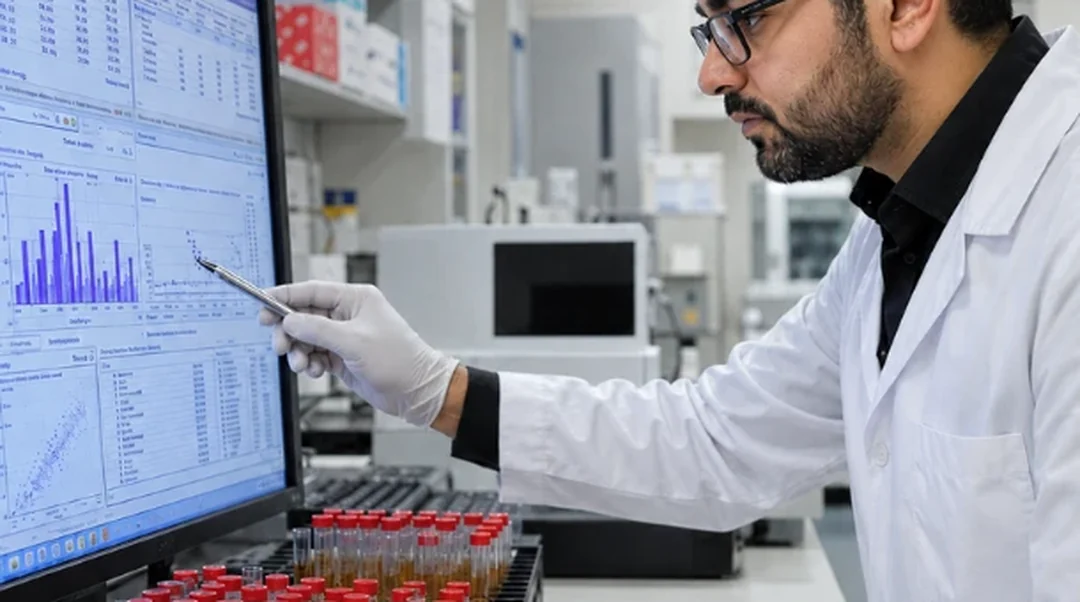
The goals of preformulation are to establish the physicochemical properties of a drug substance, determine its stability and degradation behaviour, define its physical and powder characteristics, and confirm its compatibility with common excipients. Together, these goals decide which dosage form is feasible, which excipients are safe to use, and where the real development risks sit.
Preformulation at a Glance
Measure the physicochemical properties of the active pharmaceutical ingredient (API) on its own, before any excipient is added.
Find out how heat, moisture, light, oxygen and pH affect the substance, and identify what it degrades into.
Turn those measurements into decisions: which dosage form, which excipients, which process route and which packaging.
Preformulation is the cheapest stage at which a product-limiting property can be found. The same finding after exhibit batches costs a filing cycle.
What Is Preformulation?
Preformulation is the first scientific stage of pharmaceutical development, in which a drug substance is characterised on its own — chemically, physically and in simple mixtures with excipients — before any dosage form is designed. It produces the property data that every later formulation decision depends on.
The preformulation definition used in industrial pharmacy is deliberately narrow — and the term is written both as one word and as pre-formulation, with no difference in meaning. It is not formulation trials, and it is not analytical method validation. It is the systematic measurement of what the molecule is: how soluble it is, how it ionises, what solid form it adopts, how it behaves as a powder, how it degrades, and what it reacts with.
The work usually begins as soon as a reasonable quantity of the drug substance becomes available. For a new chemical entity, that is shortly after a development candidate is nominated. For a generic, it begins once the API source is selected and a reference product has been obtained. Where the work is outsourced, it is normally scoped as a defined preformulation development programme with an agreed study list and a stated deliverable.
There is also a narrower role of preformulation in drug discovery, sometimes described as developability assessment, in which a limited set of physicochemical measurements is used to compare candidate molecules before one is chosen. That work sits at the interface between discovery and development. Everything described below concerns the fuller programme that follows candidate selection.
What Are the Goals of Preformulation?
The goals of preformulation are to establish the physicochemical parameters of a new drug substance, determine its kinetic rate profile, define its physical characteristics, and establish its compatibility with common excipients. A fifth, more modern goal has been added by regulators: to generate the evidence base for the product's control strategy.
These four classical preformulation goals are the ones set out in standard industrial pharmacy teaching, and they remain accurate. What has changed is that the data is now expected to justify design choices, not merely to exist.
- Establish the physicochemical parameters. Solubility, pH-solubility profile, dissociation constant (pKa), partition coefficient (logP), melting behaviour, solid form and crystallinity.
- Determine the kinetic rate profile. How quickly the substance degrades under defined stress, by what mechanism, and into what degradation products.
- Define the physical characteristics. Particle size distribution, particle shape, bulk and tapped density, flow behaviour, compressibility and moisture uptake.
- Establish excipient compatibility. Whether the substance reacts with the excipients a formulator would otherwise reach for, and at what ratio the risk appears.
- Support the control strategy. Provide the scientific rationale for specifications, critical quality attributes and the pharmaceutical development section of a regulatory dossier, consistent with ICH Q8(R2) Pharmaceutical Development.
Goals versus objectives
Teaching material often separates the two. The preformulation goals are the categories of knowledge to be established. The objective is what that knowledge is for: an elegant, stable, effective and safe dosage form that can be manufactured reproducibly at commercial scale.
Why Is Preformulation Important in Drug Development?
Preformulation is important because it converts unknown molecular behaviour into design decisions at the cheapest possible point in development. A solubility, solid-form or degradation problem found during preformulation costs weeks of laboratory work. The same problem found during stability or exhibit-batch manufacture can cost an entire filing cycle.
The role of preformulation in drug development is therefore economic as much as scientific. Five consequences follow directly from the data it generates.
It decides which dosage form is realistic
A poorly soluble, high-dose substance cannot become a conventional immediate-release tablet without an enabling strategy. A thermolabile substance cannot survive a hot-melt process. These are not preferences; they are constraints set by the molecule, and the data identifies them before a formulation route is committed to.
It protects bioavailability
For oral products, absorption depends on the drug dissolving in gastrointestinal fluid. Solubility across the physiological pH range, intrinsic dissolution rate and particle size together predict whether dissolution will limit absorption. Where it will, preformulation identifies the lever — salt selection, particle-size reduction, an amorphous approach or a solubilising system.
It defines the stability risk and the shelf life
Forced degradation establishes the degradation pathways and the conditions that trigger them. That determines the packaging, the storage statement, the specification for related substances and the realistic shelf life — long before formal stability studies under ICH Q1A(R2) begin.
It prevents avoidable formulation failure
Drug–excipient incompatibility is one of the most common causes of late-stage stability failure. Screening it at preformulation costs a few weeks. Discovering it at six-month stability, after exhibit batches have been manufactured, means reformulating and repeating the entire stability programme.
It supports the regulatory dossier
Regulators expect specifications to be justified, not asserted. ICH Q6A requires decisions on polymorph control, particle size and dissolution to rest on evidence. This is where that evidence originates. A peer-reviewed assessment of the impact of preformulation on drug development reaches the same conclusion from the research side.
What Preformulation Measures — and What Each Property Decides
Most published material lists preformulation parameters. Fewer state what each measurement actually decides, or what happens when it is skipped. The table below does both.
Swipe horizontally to view the full table.
| Property measured | The decision it unlocks | What goes wrong if it is skipped |
|---|---|---|
| Solubility and pH-solubility profile | Whether a conventional oral form is viable; whether a salt, particle-size or solubilisation strategy is needed. | Dissolution failures and low bioavailability emerge at pilot scale, after the formulation is fixed. |
| pKa and logP / logD | Salt selection, formulation pH, and the expected absorption window. | Salt screening proceeds blind; pH-dependent precipitation is discovered in vivo. |
| Solid form, crystallinity and polymorphism | Which form is manufactured, specified and controlled; whether form conversion is possible. | A metastable form converts during storage or processing, changing dissolution after exhibit batches. |
| Hygroscopicity and moisture sorption | Packaging, handling environment, and whether a wet granulation route is usable. | Weight gain, caking and blend non-uniformity at scale; failures at accelerated humidity conditions. |
| Chemical stability and forced degradation | Storage conditions, shelf-life expectation, and the related-substances specification. | The analytical method cannot resolve real degradants; unknown peaks appear during long-term stability. |
| Drug–excipient compatibility | Which excipients enter the formulation, and at what ratio. | An incompatibility surfaces at six-month stability, after exhibit batches have been manufactured. |
| Particle size and morphology | Dissolution rate, content uniformity and blending behaviour. | Content-uniformity failures for low-dose products; batch-to-batch dissolution variability. |
| Powder flow, density and compressibility | Whether direct compression is possible; tooling, die fill and the process route. | Capping, lamination, weight variation and stalled scale-up trials. |
Read down the middle column and the pattern appears: these are not tests, they are decisions, each supported by a measurement — which is precisely what a regulator later asks the sponsor to justify.
Which Analytical Techniques Are Used in Preformulation?
Preformulation relies on a small, well-established set of analytical techniques: chromatography for assay and degradation, thermal analysis for solid-state behaviour, diffraction for polymorph identity, spectroscopy for interaction, and standard pharmacopoeial methods for powder properties.
Swipe horizontally to view the full table.
| Technique | What it establishes |
|---|---|
| HPLC / UPLC with PDA detection | Assay, related substances, and the stability-indicating method that underpins all stability work. |
| LC-MS | Identification of degradation products formed during forced degradation. |
| Differential scanning calorimetry (DSC) | Melting point, glass transition, polymorphic transitions and early compatibility signals. |
| Thermogravimetric analysis (TGA) and Karl Fischer titration | Water and solvent content, hydrate or solvate behaviour, and decomposition onset. Karl Fischer resolves tightly bound water that TGA alone may misattribute. |
| X-ray powder diffraction (XRPD) | Crystalline versus amorphous character, polymorph identity, and form change on storage. |
| FTIR and Raman spectroscopy | Functional-group interaction with excipients and confirmation of solid form. |
| Dynamic vapour sorption (DVS) | Moisture sorption and desorption behaviour; classification of hygroscopicity. |
| Laser diffraction and optical microscopy | Particle size distribution and particle habit. |
| Intrinsic and apparatus dissolution | Dissolution rate independent of formulation, and selection of discriminatory media. |
| Bulk / tapped density, angle of repose, Carr's index | Flow and compressibility, and therefore the feasible manufacturing route. |
No single technique is sufficient on its own. Solid-form conclusions in particular should always rest on at least two independent methods — a point returned to in the best practices below. Molkem Labs describes its instrumentation and method scope on its analytical and microbiological services page.
What Is the Difference Between Preformulation and Formulation?
Preformulation characterises the drug substance. Formulation designs the drug product. The first asks what the molecule is and what it will tolerate; the second asks what to build with it. One produces data and constraints; the other produces prototypes and a manufacturing process.
The distinction matters in practice because the two are often compressed. A team under pressure begins trial batches with a partially characterised substance, then spends months explaining results that preformulation would have predicted in weeks.
Preformulation
API alone, or in simple binary mixtures. Output: physicochemical data, degradation pathways, compatibility findings, and a feasibility view of dosage forms. Small quantities of drug substance.
Formulation development
API plus a complete excipient system. Output: prototype formulations, a process route, dissolution and stability performance, and the batches used for pilot and exhibit manufacture. Substantially larger quantities.
A practical test: if the question is about the molecule, it belongs to preformulation. If the question is about the product, it belongs to formulation development.
Preformulation in Solid Dosage Form Development
Solid oral dosage forms place the heaviest demands on preformulation, because a tablet or capsule depends on both chemistry and powder mechanics. The drug must dissolve reliably in the gastrointestinal tract, and the blend must flow, compress and stay uniform on a high-speed press.
Preformulation in solid dosage form development therefore has to answer two separate families of question at once.
The biopharmaceutical questions
- Is solubility or permeability the limiting factor? The Biopharmaceutics Classification System framework used in ICH M9 is the usual starting point.
- Does solubility change enough across the physiological pH range to affect absorption?
- Will particle size need to be specified and controlled to secure reproducible dissolution?
The mechanical questions
- Will the powder flow well enough for direct compression, or is granulation unavoidable?
- Is the substance compressible, or will the formulation depend on the excipients to carry compaction?
- Does the substance pick up moisture at levels that rule out an aqueous wet process?
These are also the questions behind the classic application of preformulation studies taught in industrial pharmacy: given this substance, is a tablet, a capsule, a liquid or a parenteral the sensible route? The answer is rarely a matter of preference once the data exists.
Best Practices for Preformulation
The difference between a preformulation programme that earns its cost and one that simply produces data lies almost entirely in sequencing, method quality and documentation. The following practices reflect established industry expectations rather than any single house method.
Start from the target product profile, not the test list
Define the intended dosage form, strength range, route and markets first. A protocol written against a target product profile tests what matters. One written from a generic checklist generates data nobody uses, and often omits the one study the product actually needed.
Confirm the solid form before anything else
Every downstream measurement — solubility, dissolution, stability, compatibility — is a property of a particular solid form. If the form is uncharacterised, or changes partway through the programme, the dataset becomes internally inconsistent. Establish form identity by XRPD and thermal analysis at the start, and re-check it at the end.
Measure equilibrium solubility, not only apparent solubility
A quick shake-flask reading taken too early records a supersaturated or metastable state, not the equilibrium value. Allow the system to reach equilibrium, confirm the solid residue has not converted to another form, and report the pH at which each value was obtained.
Build the stability-indicating method first, then design forced degradation to be decisive
Forced degradation is only meaningful if the method can separate the parent from every significant degradant, so develop the method before generating the samples — doing it the other way round is the most common reason preformulation stability data has to be repeated. Then pitch the stress conditions to be severe enough to reveal the degradation pathways and mild enough that the products are real rather than artefacts. Cover acid, base, oxidative, thermal, humidity and photolytic stress, and record the conditions precisely so the work can be reproduced.
Use orthogonal techniques for any conclusion that matters
A polymorph call from DSC alone, or a compatibility call from a single thermal scan, is not a finding — it is a signal. Confirm it with an independent technique such as XRPD, spectroscopy or a chromatographic assay before it is allowed to change a formulation decision.
Run compatibility at realistic ratios, not only binary mixtures
Binary drug–excipient mixtures are a useful screen, but a 1:1 blend is not the formulation. Follow the screen with mixtures at the ratios actually proposed, stored under defined temperature and humidity, and assessed by a stability-indicating assay rather than appearance alone.
Plan the drug-substance budget before the protocol
These studies consume drug substance, and early-phase material is usually the scarcest item in the programme. Agree the available quantity first, then sequence the studies so that the decisive, low-consumption tests run before the expensive ones.
Record to submission standard, and hand over decisions rather than a report
This data is frequently cited in the pharmaceutical development section of a dossier years later, so raw data, instrument parameters, sample history and analyst records should meet the same data-integrity expectations as formal studies even when the study itself is exploratory. Close the programme with an explicit statement of what the data rules in, what it rules out, and which questions remain open, so the formulation team starts from conclusions rather than re-reading chromatograms.
Preformulation for Generics and Reference-Product Reverse Engineering
Generic development changes the starting point of preformulation but not its goals. Instead of characterising an unknown molecule, the team characterises a known one against a defined target: the reference listed drug. The work becomes comparative rather than exploratory.
This is the dominant development reality for most Indian pharmaceutical companies, and it shifts the emphasis of the programme in three ways.
The API source is a variable, not a constant
Different suppliers can provide the same drug substance in different solid forms, particle sizes and impurity profiles. Preformulation on a generic therefore characterises this API from this supplier. Changing the source later usually means repeating the relevant studies.
The reference product sets the target
Reverse engineering the reference product establishes what the formulation must match: dissolution behaviour, physical attributes and, where relevant, excipient function. Preformulation data on the API is what makes it possible to judge which differences matter and which do not.
Solid-form selection is constrained by patents
Polymorph and salt selection in generic development is not purely a scientific choice. The selected form must be both suitable and legally available. Solid-form characterisation therefore has a commercial dimension that new-molecule programmes do not share.
Our guide to generic drug product development covers how these decisions fit into the wider programme.
Preformulation in India: CDSCO and ICH Context
The science of preformulation does not change by country. What changes is the regulatory framework that the resulting data must eventually satisfy. For products developed in India, that means the Central Drugs Standard Control Organisation (CDSCO) alongside the ICH guidelines that most target markets apply.
Preformulation itself is not a separately licensed activity. Regulatory obligations arise later — when a sponsor applies to conduct a clinical trial, or to manufacture or import a new drug — under the New Drugs and Clinical Trials Rules, 2019. But the data supporting those applications is generated much earlier, and its quality is fixed at the point it is recorded.
Practical implications for Indian programmes
- Design against every intended market, not India alone. A programme aimed at India plus regulated export markets should meet the most demanding expectation from the outset. Retrofitting data is expensive and often impossible.
- Treat ICH quality guidelines as the working standard. Q1A(R2) for stability, Q6A for specifications and Q8(R2) for pharmaceutical development shape how preformulation data will be assessed in most regulated markets.
- Document data integrity from the first study. Audit trails, instrument records and analyst attribution apply to exploratory work, not only to formal studies.
- Fix responsibilities before work begins. Where preformulation is outsourced, the sponsor and the development partner should agree in writing who owns the data, who retains raw records and who is accountable for each study.
- Confirm current requirements. Guidance changes. Requirements should be checked against current CDSCO and ICH positions for the specific product rather than assumed from a previous programme.
Our guide to regulatory affairs in drug development examines how these obligations are planned across a full programme.
Conclusion
The goals of preformulation have not changed in decades: establish the physicochemical parameters, determine the degradation behaviour, define the physical characteristics, and confirm excipient compatibility. What has changed is the expectation attached to them. That data is now the justification a regulator reads when asking why a specification was set where it was.
The commercial case is simpler still. Preformulation is the cheapest stage of development at which a product-limiting property can be found. Every stage after it is more expensive, and the cost of discovering the same fact rises sharply once exhibit batches exist. Programmes that treat preformulation as a decision-making exercise rather than a testing exercise carry markedly less risk into formulation.
The handover matters as much as the data. A preformulation programme closes well when it tells the formulation team which dosage forms the substance will support, which excipients have been ruled out and why, which properties must be specified, and which risks remain open — so formulation development starts from conclusions rather than from raw results.
Frequently Asked Questions
What are the goals of preformulation?
The goals of preformulation are to establish the physicochemical parameters of the drug substance, determine its kinetic rate profile under stress, define its physical and powder characteristics, and establish its compatibility with common excipients. A fifth goal, now expected by regulators, is to provide the evidence base for the product's specifications and control strategy.
Why is preformulation important in drug development?
Because it converts unknown molecular behaviour into design decisions at the cheapest point in development. Preformulation determines which dosage form is feasible, protects bioavailability, defines the stability risk, prevents avoidable excipient incompatibility, and supplies the data that justifies specifications in a regulatory dossier. The same findings made later, after exhibit batches, are far more expensive to act on.
What is the difference between preformulation and formulation?
Preformulation characterises the drug substance; formulation designs the drug product. Preformulation works with the API alone or in simple binary mixtures and produces data and constraints. Formulation works with a complete excipient system and produces prototypes, a process route and batches. Preformulation asks what the molecule will tolerate; formulation asks what to build with it.
What is polymorphism in preformulation?
Polymorphism is the ability of a drug substance to exist in more than one crystalline arrangement. Different polymorphs of the same molecule can differ in solubility, dissolution rate, stability and compressibility. Preformulation identifies which forms exist, which one is being used, and whether it can convert to another during processing or storage — a conversion that can change product performance after the formulation is fixed.
What are the applications of preformulation in industrial pharmacy?
The main application is dosage form selection and design: deciding whether a substance suits a tablet, capsule, liquid or parenteral route, which excipients are safe to use, which manufacturing process is feasible, what packaging is required, and which attributes must be specified and controlled. Preformulation data also supports salt and solid-form selection, shelf-life prediction and the pharmaceutical development section of a regulatory submission.
What is the concept of preformulation in modern pharmaceutics?
Modern pharmaceutics treats preformulation as risk identification rather than routine testing. The concept is that a drug substance carries inherent properties that will limit the product, and that finding those limits early is cheaper than encountering them later. Under a quality-by-design approach, preformulation data also supplies the scientific understanding on which critical quality attributes and the control strategy are built.
What is a preformulation tablet?
The term is usually shorthand for an early trial compact made at the pre-formulation stage to see how a powder behaves under compression — for example whether it caps, laminates or compresses cleanly. It is not a prototype formulation, and it is not intended for dissolution or stability assessment. Formal tablet prototypes belong to formulation development, once the substance is fully characterised.
How long do preformulation studies take?
It depends on the study list, the availability of drug substance and whether a stability-indicating method already exists. A focused package on a well-behaved substance is considerably quicker than one involving a full salt or polymorph screen. The largest single variable is analytical method development, which often has to be completed before the stability work can start.
Are SlideShare decks and PDF lecture notes a reliable source on the goals of preformulation?
Search results for goals of preformulation SlideShare and similar study material are generally accurate on the classical four goals, because that framework is long-established and consistently taught. They are less reliable on current practice — regulatory expectations, analytical method standards, data-integrity requirements and solid-state characterisation have all moved on. For teaching material, use the decks. For programme decisions, use current ICH guidance and primary literature.
Does Molkem Labs carry out preformulation studies?
Yes. Molkem Labs provides preformulation and physicochemical characterisation as part of its pharmaceutical development services, including solubility and pH-solubility profiling, salt and polymorph screening, excipient compatibility, forced degradation, particle size and powder-flow determination, and reverse engineering of reference products. The applicable scope is defined for each product and project.
Planning a Preformulation Programme
Molkem Labs performs preformulation and physicochemical characterisation, analytical method development, stability, formulation and regulatory support within a defined development programme. Enquiries are assessed against the product requirements and the confirmed project scope.