
Stability testing in pharma establishes how the quality of a drug substance or drug product changes over time under the influence of temperature, humidity and light. Samples are stored under controlled conditions defined by ICH guidelines and tested at fixed intervals with validated, stability-indicating analytical methods. At Molkem Labs, this work sits within the wider analytical and microbiological services that support each development programme.
The resulting data is a registration requirement in every ICH and WHO-aligned market, including CDSCO in India, and it decides three things that appear on the product label and in the dossier.
The shelf life of a finished product, or the retest period of an active substance, supported by real-time data and statistical evaluation.
The temperature and humidity conditions stated on the label, set by the climatic zone of each target market.
Confirmation that the proposed pack protects the product from temperature, humidity and light across its shelf life.
Stability is usually the longest lead-time element of a registration dossier, because the data cannot be generated faster than the calendar allows. Under ICH Q1A(R2), a registration application is expected to include at least 12 months of long-term data and 6 months of accelerated data on a minimum of three primary batches at the time of submission.
The point at which registration batches are placed on stability therefore fixes the earliest date a dossier can be filed. A protocol that misses a required condition, a pull point or a stability-indicating method cannot be corrected retrospectively, and the gap is typically resolved only by placing new batches and waiting again.
Products intended for several markets add a further consideration. India sits in ICH climatic Zone IVb, where long-term storage runs at 30°C and 75% relative humidity, while Zone II markets use 25°C and 60% relative humidity. A product filed in both may need more than one long-term arm, which is agreed when the protocol is written rather than discovered at submission.
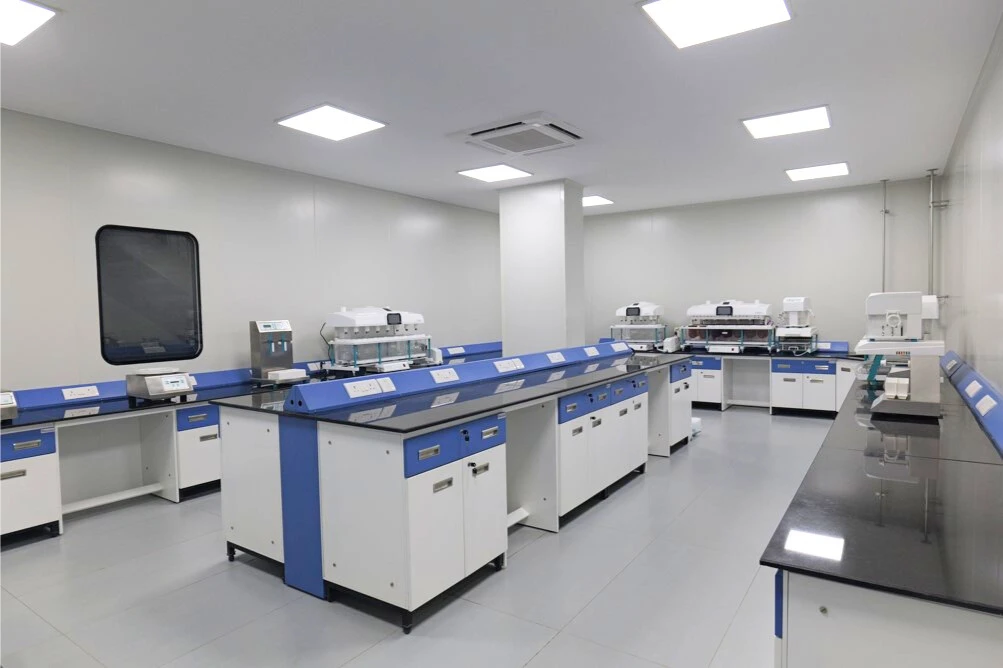
Molkem Labs stability study services cover the full set of studies a registration programme requires, from early formulation screening and drug substance stability testing through to the data that supports a shelf-life or retest-period claim. Each study is run against an approved protocol and tested with validated methodology.
Storage at the long-term condition for the target market, including Zone IVb at 30°C and 75% RH, tested at defined pull points to establish the shelf life or retest period.
Storage at 40°C and 75% RH for six months to evaluate the effect of short-term excursions and to support extrapolation where ICH Q1E permits it.
Storage at 30°C and 65% RH where significant change occurs under accelerated conditions for a product labelled for 25°C storage.
Confirmatory and forced light-exposure studies in a photostability chamber in line with ICH Q1B, establishing whether light-protective packaging or labelling is required.
Stress testing under acid, base, oxidative, thermal and photolytic conditions to identify degradation pathways, and development and validation of the stability-indicating methods used at every pull point.
Studies covering multi-dose use after opening, temperature cycling during transport, and freeze-thaw exposure, supporting in-use periods and distribution conditions.
The storage conditions for a programme are selected from the ICH Q1A(R2) general case and, for hot and very humid markets, from the WHO stability guidance for Zone IVb. The conditions run for a specific product are agreed in the protocol against its intended storage and its target markets.
| Study | Storage condition | Minimum period at submission | Typical use |
|---|---|---|---|
| Long-term (Zone II) | 25°C ± 2°C / 60% RH ± 5% RH | 12 months | Products labelled for storage below 25°C in temperate markets |
| Long-term (Zone IVa) | 30°C ± 2°C / 65% RH ± 5% RH | 12 months | Hot and humid markets, and an accepted alternative long-term condition under ICH |
| Long-term (Zone IVb) | 30°C ± 2°C / 75% RH ± 5% RH | 12 months | Hot and very humid markets, including India |
| Intermediate | 30°C ± 2°C / 65% RH ± 5% RH | 6 months (12-month study) | Required when significant change occurs at the accelerated condition |
| Accelerated | 40°C ± 2°C / 75% RH ± 5% RH | 6 months | Evaluating short-term excursions and supporting extrapolation |
| Refrigerated, long-term | 5°C ± 3°C | 12 months | Products labelled for refrigerated storage, with accelerated testing at 25°C / 60% RH |
| Freezer, long-term | −20°C ± 5°C | 12 months | Products labelled for storage in a freezer |
Swipe the table sideways to see every column.
Conditions follow ICH Q1A(R2). ICH withdrew Q1F in 2006 and left the definition of Zone III and IV storage conditions to the respective regions and the WHO, whose stability guidance sets the Zone IVb long-term condition used for India.
Every stability programme at Molkem Labs runs through seven stages under good manufacturing practice controls, from the first technical review to the signed stability report. The stages are designed so that the storage history and the test results of every sample can be defended during regulatory assessment or inspection.
The product, dosage form, pack, available batches and target markets are reviewed to define the storage conditions, the number of long-term arms and the testing schedule, and to agree the recommended scope of work.
Batches, packs, conditions, pull points, tests and acceptance criteria are defined, with bracketing and matrixing designs for stability testing applied under ICH Q1D where the product range justifies them. Quality assurance approves the protocol before any sample is placed.
The analytical methods for each test are developed or verified and validated, using forced degradation samples to confirm specificity, so that the methods are in place before the first pull point.
Samples are received, labelled and inventoried, tested at the initial time point, and placed in stability chambers that have been qualified and temperature and humidity mapped.
Chamber conditions are recorded continuously against alarm limits. Any excursion is documented and assessed for its impact on the samples, giving a complete and defensible storage history.
Samples are withdrawn within defined pull windows and tested, and results are trended at every time point. Out-of-trend and out-of-specification results are investigated under a documented procedure, with analytical records maintained with audit trails in line with 21 CFR Part 11 expectations.
Results are evaluated statistically under ICH Q1E to support the proposed shelf life or retest period, and quality assurance reviews the stability reports and summaries prepared for Modules 3.2.S.7 and 3.2.P.8 of the Common Technical Document (CTD).
A stability programme is designed against the guidelines its data will be assessed under, run within a documented quality system, and handled as confidential product information throughout.
Programmes are designed to the ICH stability series: Q1A(R2) for the core data package, Q1B for photostability, Q1C for new dosage forms, Q1D for bracketing and matrixing, and Q1E for the evaluation of stability data. Test methods follow the applicable chapters of the Indian Pharmacopoeia, the United States Pharmacopeia and the European Pharmacopoeia for the target market.
Stability data and reports are prepared for CDSCO (India), US FDA, EMA, ANVISA, Health Canada, TGA, NMPA and Rest of World (ROW) markets. The target markets are agreed before the protocol is approved, because they determine the long-term conditions, the number of storage arms and the documentation the dossier requires. Molkem Labs regulatory services can compile the stability sections into the wider submission.
Studies run under a documented Quality Management System (QMS) built on risk-based quality management, with controlled documentation, defined change control and deviation handling, and data integrity and traceability maintained across chamber, sample and analytical records. The laboratory operates under cGMP, with NABL-accredited capabilities and 21 CFR compliant systems.
Every engagement begins under a signed Non-Disclosure Agreement (NDA), and no samples or proprietary data are accepted before it is in place. Project-specific intellectual property ownership is defined in the agreement, and the customer's product, data and proprietary information are protected throughout the programme.
Stability studies can be commissioned on their own or as part of an integrated development programme, where the same team that develops the formulation and its analytical methods also designs the stability study that supports it.
Release testing, method development and validation, microbiological testing and the instrumentation behind them.
Explore Information →Characterization, stability-indicating method development and validation supporting the development programme.
Explore Information →Dosage-form development across oral solids, oral liquids, semi-solids and sterile parenteral products.
Explore Information →Physicochemical characterization, solubility, degradation and excipient compatibility studies.
Explore Information →Risk evaluation, confirmatory testing and control strategy for nitrosamine impurities.
Explore Information →The integrated development offer, from product concept to technology transfer and regulatory submission.
Explore Information →Stability testing in pharma is the study of how the quality of a drug substance or drug product changes over time when it is exposed to temperature, humidity and light. Samples are stored under ICH conditions and tested at set intervals with stability-indicating methods. The data sets the shelf life or retest period, the label storage statement and the packaging, and it is required for registration.
The core types are long-term (real-time) studies at the intended storage condition, accelerated studies at 40°C and 75% RH, intermediate studies at 30°C and 65% RH, photostability testing under ICH Q1B, and forced degradation or stress testing. Depending on the product, programmes also include in-use, in-transit and freeze-thaw studies.
GMP stability testing is stability work performed under good manufacturing practice controls: qualified and mapped chambers, continuous monitoring, controlled sample management, validated methods, investigated out-of-specification results and quality assurance review. Early development studies used to choose between formulations are often run outside GMP, but the registration and commercial stability data filed in a dossier needs to be generated under GMP.
Drug substance stability testing studies the active pharmaceutical ingredient on its own, usually on at least three batches of at least pilot scale stored in packaging that simulates the commercial pack. It establishes the retest period and storage conditions for the active substance, and it is filed in Module 3.2.S.7 of the CTD. Stress testing performed as part of it also identifies the degradation products the finished-product methods must detect.
Under ICH Q1A(R2), a registration application is expected to include at least 12 months of long-term data and 6 months of accelerated data on three primary batches when it is filed. In practice that means batches need to be on stability at least a year before the planned filing date. Long-term testing then continues through the full proposed shelf life after submission.
India is classified as ICH climatic Zone IVb, the hot and very humid zone, so long-term stability for the Indian market runs at 30°C and 75% relative humidity, with accelerated studies at 40°C and 75% relative humidity. A product also filed in temperate markets may need an additional long-term arm at 25°C and 60% relative humidity.
Accelerated stability testing stores the product at an elevated condition, normally 40°C and 75% relative humidity for six months, to speed up chemical degradation and physical change. It is used to assess the effect of short-term excursions such as shipping, and, together with long-term data, it can support a limited extrapolation of shelf life under ICH Q1E. It does not replace real-time data.
They are reduced designs permitted under ICH Q1D. Bracketing tests only the extremes of a range, such as the highest and lowest strengths or container sizes, on the basis that the intermediate presentations behave within those limits. Matrixing tests a selected subset of samples at each time point. Both reduce the testing load for a large product range, but they need to be justified in the protocol.
A stability-indicating method is a validated analytical procedure, usually chromatographic, that can measure the active ingredient accurately in the presence of its degradation products, excipients and impurities. It is demonstrated using forced degradation samples, and it has to be in place before the first stability pull point, since results generated with a non-specific method cannot support a shelf-life claim.
Every engagement begins under a signed Non-Disclosure Agreement (NDA), and no samples or proprietary data are accepted before it is in place. Project-specific intellectual property ownership is defined in the agreement, and your product, data and proprietary information are protected throughout the stability programme.
To scope stability study services for your product, share the product, the dosage form and pack, the batches available and the markets you are filing in. Our business development executive will respond with a recommended scope of work for the stability programme, the storage conditions and testing schedule it requires, a realistic timeline, and a cost proposal, under a signed Non-Disclosure Agreement (NDA), with no obligation to proceed.
Every enquiry is treated as confidential. You can also email hello@molkem.com.


 Global - English
 Brazil - Portuguese
 Thailand - Thai
 Middle East - Arabic
 Vietnam - Vietnamese
 Spain - Spanish
 Colombia - Spanish
 Argentina - Spanish
